


Content Strategy in the AI Era: Winning Answers and Citations: How people search for information has fundamentally changed. Customers no longer scroll through lists of web links, but instead ask artificial intelligence tools for direct answers. If your content merely repeats keywords, AI answer engines will pass you by. Today, to win recommendations, your business must create helpful, trustworthy answers that AI tools want to cite. At VeeFx.com, we show you how to turn your website into an authoritative, AI-ready resource.
Key Takeaways
- Focus on Answers Over Keywords: Modern search engines evaluate complete answers rather than counting repeated keywords, rewarding content that directly addresses real customer problems.
- Adopt the Answer-First Format: Placing clear two-sentence summaries directly beneath major headings helps AI assistants extract your advice for quick answer boxes.
- Support Claims with Real Data: Using specific numbers, research findings, and verified measurements significantly increases your chances of getting cited by AI engines.
- Highlight Proven Human Experience: Sharing direct team quotes, case studies, and original photos proves your expertise and prevents your writing from sounding like generic copy.
- Keep Content Fresh and Active: Regularly updating existing guides with new facts and seasonal advice ensures search tools continue quoting your business as an up-to-date authority.
 Related article
Practical AI Search Engine Marketing Guide for Startups: Low-Cost Tactics for Fast Visibility
Conversational AI creates new opportunities for startups to compete with established brands. VeeFx.com helps bootstrapped businesses attract high-intent customers through clear content, local proof, and affordable AI search strategies…
Phase 1: Why Traditional Keyword SEO Is Obsolete
A. From Word Matching to Understanding Intent
For years, website owners were taught that ranking on Google required finding high-volume search phrases and inserting them as many times as possible into articles. Search engines worked like digital index cards, matching exact user phrases to matching words on a page.
Artificial intelligence models like ChatGPT, Google Gemini, and Perplexity do not function as word matchers. They understand natural human conversation, evaluate context, and connect related ideas across multiple subjects. When a customer asks a complex question, AI tools search for the clearest, most reliable solution available online. Cramming repetitive keywords into your articles now signals low quality, often causing search tools to ignore your content entirely.
B. The Zero-Click Search Reality
Currently, search engines generate narrative answers right at the top of the screen. Here, users frequently find what they need without ever clicking on a website link, a trend known as zero-click search.
While raw website visits from basic informational searches may decline, the value of being cited as the source inside an AI answer is immense. When an AI tool quotes your company by name and links to your site as the verified answer, visitors clicking through are highly motivated and ready to hire you. Your goal is no longer getting page views. It is earning direct citations that establish your company as the premier expert in your field.
|
Content Strategy Dimension |
Traditional Keyword Strategy |
Modern Answer-Engine Strategy |
Impact on Commercial Growth |
|---|---|---|---|
| Primary Goal | Rank on page one for specific search terms. | Earn direct recommendations in AI summaries. | Attracts buyers who are actively ready to make a purchase. |
| Writing Structure | Long, rambling intros delaying the answer. | Direct answer summaries at the top of every section. | Enables AI tools to lift your answers directly into search boxes. |
| Supporting Evidence | Repetitive phrases and basic opinions. | Specific figures, percentages, and credible studies. | Boosts citation rates by up to 40% across major AI engines. |
| Topical Coverage | Disconnected blog posts targeting single words. | Connected topic hubs answering complete customer journeys. | Establishes deep subject authority that competitors cannot match. |
| Performance Metric | Raw page views and impressions. | Sales inquiries, quote requests, and brand mentions. | Provides clear proof of marketing return on investment. |
 Related article
How to Choose the Right Digital Marketing Agency in the AI Era
AI search tools are transforming how customers find businesses. VeeFx.com helps owners choose marketing partners who understand AI search optimization, modern strategies, and measurable business growth beyond rankings and ads…
Phase 2: How to Structure Articles That AI Search Engines Quote

A. The Inverted Pyramid Writing Approach
Conversational search engines scan pages looking for immediate clarity. When an AI engine reviews your content, it prioritizes the beginning of each section to determine whether you provide an accurate answer.
To structure web pages for AI discovery, use an inverted pyramid format. Write your section headings as clear questions or distinct concepts that viewers actually ask. Directly underneath that heading, provide a concise two-to-three sentence summary of 40 to 60 words that answers the question completely. Once constructed, you can follow up with in-depth explanations, helpful examples, and comparison tables for human readers who want more detail.
B. Backing Advice with Real Facts and Numbers
Large language models prioritize factual accuracy to avoid providing false information. When an AI system evaluates several competing websites to answer a user prompt, it favors content that includes verified numbers, survey results, and measurable data.
Academic research in Generative Engine Optimization proves that adding concrete statistics improves visibility in AI responses by up to 41%. Whenever you write a guide, include specific price ranges, project timelines, percentage improvements, and verified industry metrics. Concrete facts act as trust anchors convincing automated systems your business is an industry-leading source.
C. Demonstrating Real-World Human Experience
With the internet flooded by automated, generic content, search engines actively reward content showcasing firsthand experience. Google’s quality standards look for proof that the writer has actually done the work being described.
Include direct quotes from your leadership team, share behind-the-scenes photos of your work, and describe real customer challenges your team resolved. For example, instead of writing an abstract article on heating maintenance, quote your lead service technician explaining what part failed during a freezing weekend emergency. Human stories cannot be faked by generic writing tools, giving your brand an unshakeable advantage.
|
Content Optimization Lever |
Visibility Lift |
Why AI Engines Value It |
Practical Way to Apply It |
|---|---|---|---|
| Specific Data & Metrics | +37% to +41% | Numbers provide clear factual proof that AI models can verify. | Add concrete costs, timelines, and measurable results. |
| Authoritative Sources | Up to +40% | Linking to reputable studies confirms your claims are accurate. | Mention industry research and official regulatory standards. |
| Direct Expert Quotes | +28% to +30% | Named human experts signal genuine hands-on experience. | Include short advice quotes from your team members. |
| Clear Technical Language | +28% | Professional terms show you understand your industry deeply. | Use accurate trade terminology rather than vague slang. |
| Answer-First Summaries | Up to 44% lift | Early document text is prioritized during automated reading. | Place a two-sentence answer directly below each main heading. |
 Related article
Website Redesign and Migration Guide: How to Protect Your Rankings in the AI Era
Website redesigns can threaten search rankings, traffic, and AI visibility. VeeFx.com provides structured migration strategies that protect page authority, preserve customer inquiries, and maintain business visibility during major website changes…
Phase 3: Building Topic Clusters Instead of Isolated Blog Posts
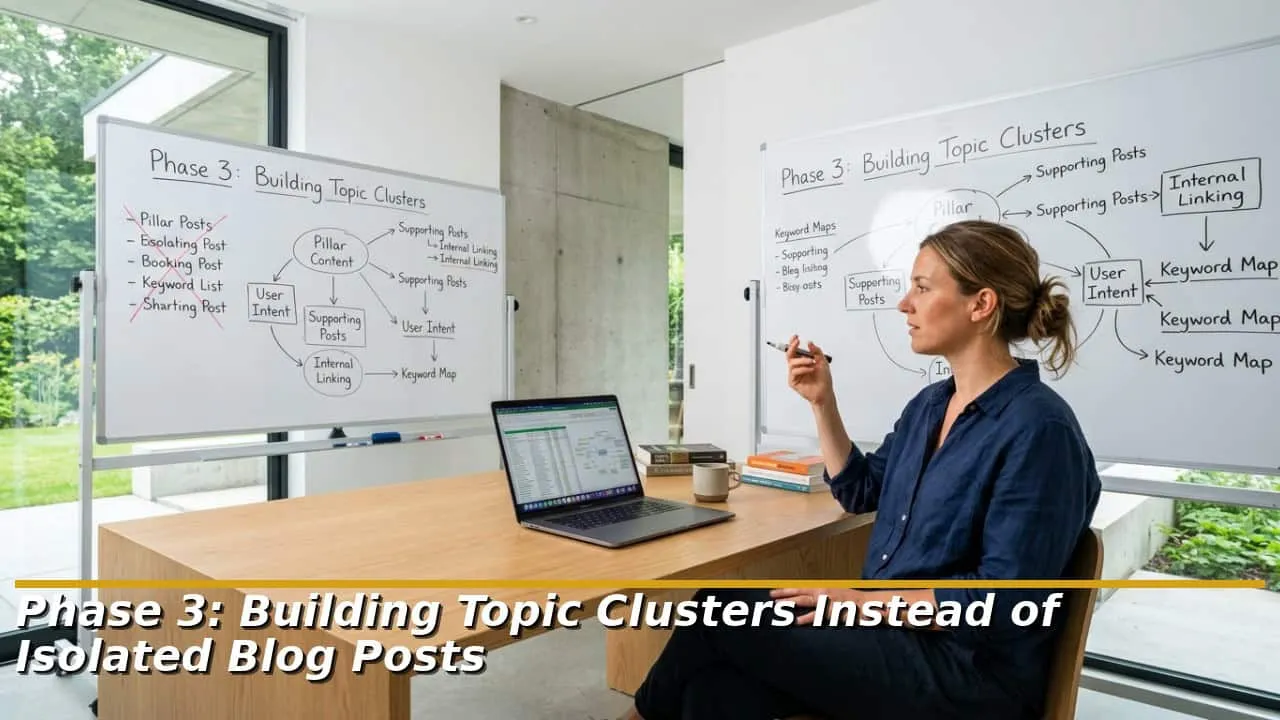
A. Moving from Single Pages to Topic Networks
In the past, businesses published disconnected blog posts targeting single keywords like, “kitchen remodeling cost” or, “kitchen cabinet ideas.” Today, search engines evaluate an entire website to see if you have deep, comprehensive knowledge across your whole industry.
To build lasting authority, organize your website around topic clusters. These start with a central pillar page that provides a broad overview of a major service. Surrounding that pillar page are several detailed sub-articles exploring specific related questions in depth. Linking all of these related pages together tells search engines that your website is a complete knowledge library for that topic.
B. Mapping Content to the Customer Journey
Every customer goes through distinct phases before making a buying decision:
- Awareness: Customers realize they have a problem, such as noticing their roof is leaking or their website is loading slowly.
- Evaluation: Customers compare potential solutions, such as patching an existing roof versus completing a full replacement.
- Decision: Customers look for the most trustworthy provider, comparing pricing, warranties, and verified customer testimonials.
Your content strategy must provide answers for each stage. By creating guides addressing early questions, comparison articles that help buyers evaluate options, and detailed case studies that prove your success, it guides prospects smoothly from their first search to a signed agreement.
C. A Real-World Example: Remodeling Contractor Content Hub
Consider a residential remodeling contractor competing in a major metropolitan area. Instead of writing aimless blog posts, the company builds an organized kitchen remodeling hub.
The main page covers the complete kitchen remodeling process from design to completion. Linked sub-articles answer specific, high-intent questions including average remodeling costs in the local area, comparisons between quartz and granite countertops, permit requirements for knocking down walls, and a step-by-step remodeling timeline. When local homeowners ask an AI tool detailed questions about remodeling costs or materials, the engine repeatedly cites the contractor’s website because it provides the most thorough, interconnected answers in the region.
 Related article
Website Design Principles in the AI Era: Building for People and Search Tools
Online search is shifting from blue links to AI-generated answers. VeeFx.com creates attractive, user-friendly websites structured for AI search, helping businesses improve visibility, reach customers, and grow online…
Phase 4: Keeping Your Content Fresh and Accurate

A. Why Outdated Content Loses Search Visibility
Publishing an article once and leaving it is a recipe for losing search visibility. AI search engines value fresh information, especially when answering questions about costs, technology, and regulations.
Research shows that content updated within the last 30 days is more than three times as likely to be cited by AI engines compared to older, neglected pages. When guides sit untouched for months, search tools assume the pricing and recommendations are out of date, quietly replacing your citations with newer content from competitors.
B. A Simple Routine for Regular Content Updates
Maintaining an active content library does not require rewriting every article from scratch. Follow this simple quarterly update routine:
- Refresh Pricing and Numbers: Review your cost guides and update dollar figures, interest rates, and material costs to reflect current economic realities.
- Add Recent Case Examples: Insert a brief description of a recently completed project to show continued activity.
- Answer New Customer Questions: Note the questions incoming callers asked your sales team this month and add direct answers to your existing service pages.
- Verify Outbound Links: Make sure all links to external resources, industry studies, and partner pages are still active and working.
|
Content Health Check |
How to Inspect It |
Action to Take |
Expected Search Result |
|---|---|---|---|
| Accurate Pricing | Check dollar figures against today’s prices. | Update estimates and hourly rates. | Maintain search engine trust in your cost guides. |
| Current Industry Facts | Review dates and regulations mentioned. | Replace old rules with current policies. | Prevents AI tools from flagging your advice as obsolete. |
| Working Links | Click all external and internal links. | Fix or replace broken page links. | Ensures search bots can crawl your pages smoothly. |
| New Customer Inquiries | Review recent client emails and calls. | Add new Q&A modules to service pages. | Captures emerging search queries before competitors. |
Conclusion
Succeeding in the AI search era means shifting from keyword repetition to helpful, reliable answers. When you publish clear explanations backed by real numbers and genuine experience, AI engines happily quote your brand. At VeeFx.com, we craft strategic content ecosystems that position your business as a trusted industry authority. Reach out to our team today to schedule a content strategy consultation and start capturing high-value search citations.
 Related article
The Strategic Value of Brand Building for Small Businesses in the AI Era
AI assistants increasingly recommend trusted businesses instead of displaying endless links. VeeFx.com helps small businesses build credible brand identities and authority that earn recognition from search engines and customers…
FAQs About Content Strategy in the AI Era: Winning Answers and Citations
1. How does an answer engine decide which website to cite in its summary?
AI answer engines seek websites that combine clear answers, verified factual data, and an established reputation. They prioritize pages stating direct solutions under section headings, reference specific statistics, and display consistent business information across independent directories and review platforms.
2. Should our business stop targeting search keywords entirely?
No, keywords are still useful for understanding what topics and questions matter to your buyers. However, rather than repeating keywords unnaturally across your text, use those phrases as topics to explore and questions to answer thoroughly in natural, everyday language.
3. Can we use AI writing tools to produce our content faster?
AI tools can help brainstorm outlines, organize notes, and identify common customer questions. However, the final text must include your real business experience, genuine team quotes, and verified local details. Unedited, purely AI-generated copy lacks original insight and struggles to earn trust from search engines.
4. How long should our articles be to get quoted by conversational AI?
Article length is less important than answer quality. A concise, 1,200-word article with clear headings, exact numbers, and direct summaries will outperform a rambling 3,000-word post. Focus on addressing the customer’s question without adding unnecessary fluff.
5. What is the quickest way to find out what questions our customers are asking?
The most reliable source of content ideas is your own front-line staff. Ask your sales representatives and customer service technicians what questions they hear on calls every week. Answering those FAQs your website guarantees you create content with immediate commercial value.